
Best Knife Sets for Beginners (2026 Guide)
A good knife makes cooking faster, safer and more enjoyable — but the wall of options is confusing. This guide explains what a beginner actually needs, what to skip, and how to choose a set that lasts.
What a Beginner Actually Needs
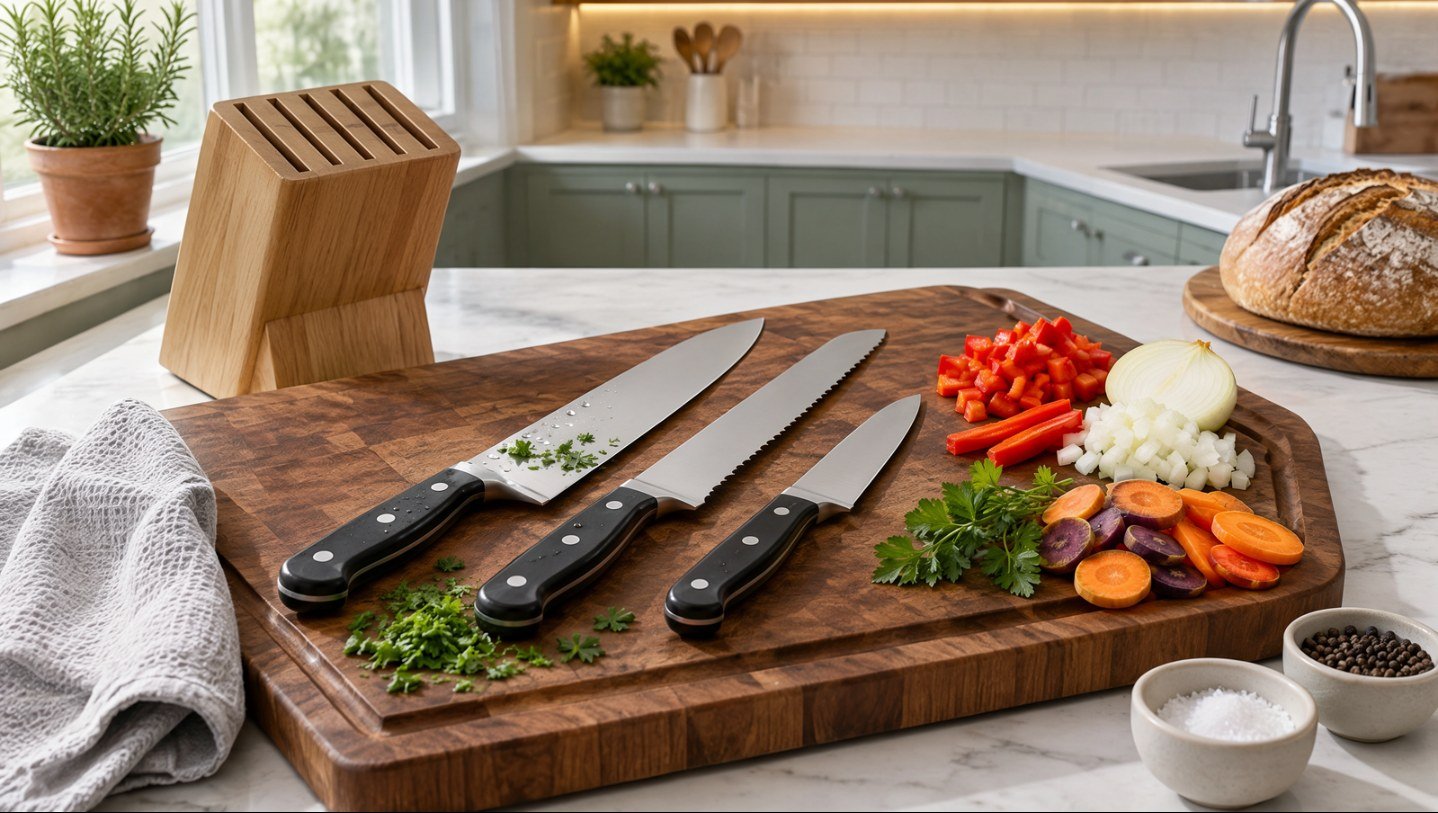
You need three knives to cook almost anything:
A chef’s knife (8-inch). The workhorse. Chopping, slicing, dicing, mincing — one good chef’s knife does 90% of kitchen cutting. This is the knife to invest in.
A paring knife (3–4 inch). For peeling, trimming, and small precise work like hulling strawberries or deveining prawns. Small, light, essential.
A serrated bread knife. For bread, tomatoes and anything with a tough crust and soft center. A serrated edge does what a straight edge can’t.
Everything else — Santoku, utility knife, carving knife — is nice to have, not need to have. Start with three, add as your cooking grows.
Knife Sets vs. Buying Individually
A set is the easy option: matched knives, a block or strip, often cheaper per knife. The catch is that big sets include knives you’ll never use. A 3–6 piece set is the sweet spot for beginners.
Buying individually costs more upfront but means every knife earns its place. If you cook daily, buying a great chef’s knife first and adding the others over time is often the smarter path.
What to Look For
Full tang. The blade’s metal should run through the handle. It’s stronger, better balanced and lasts longer than a partial tang.
Weight and balance. A good knife feels balanced at the bolster (where blade meets handle), not heavy at either end. If you can, hold it before buying — comfort matters more than brand.
Steel type. Stainless steel is low-maintenance and resists rust; high-carbon steel takes a sharper edge but needs drying after every wash. For beginners, stainless is the easy choice.
Handle comfort. The handle should fill your hand without sharp edges or slippery spots. Wood looks beautiful but needs care; synthetic handles are grippier when wet.
What to Skip (For Now)
Knife sets with 15+ pieces. Most of those knives will sit unused. You’re paying for steak knives and kitchen shears you may already own.
Ultra-cheap sets. A very cheap knife is dull out of the box, won’t hold an edge, and is genuinely dangerous — dull knives slip. Spend a little more on fewer, better knives.
A knife block you don’t need. If you have a magnetic strip or in-drawer organizer, skip the block and spend the money on the knives themselves.
Keeping Knives Sharp
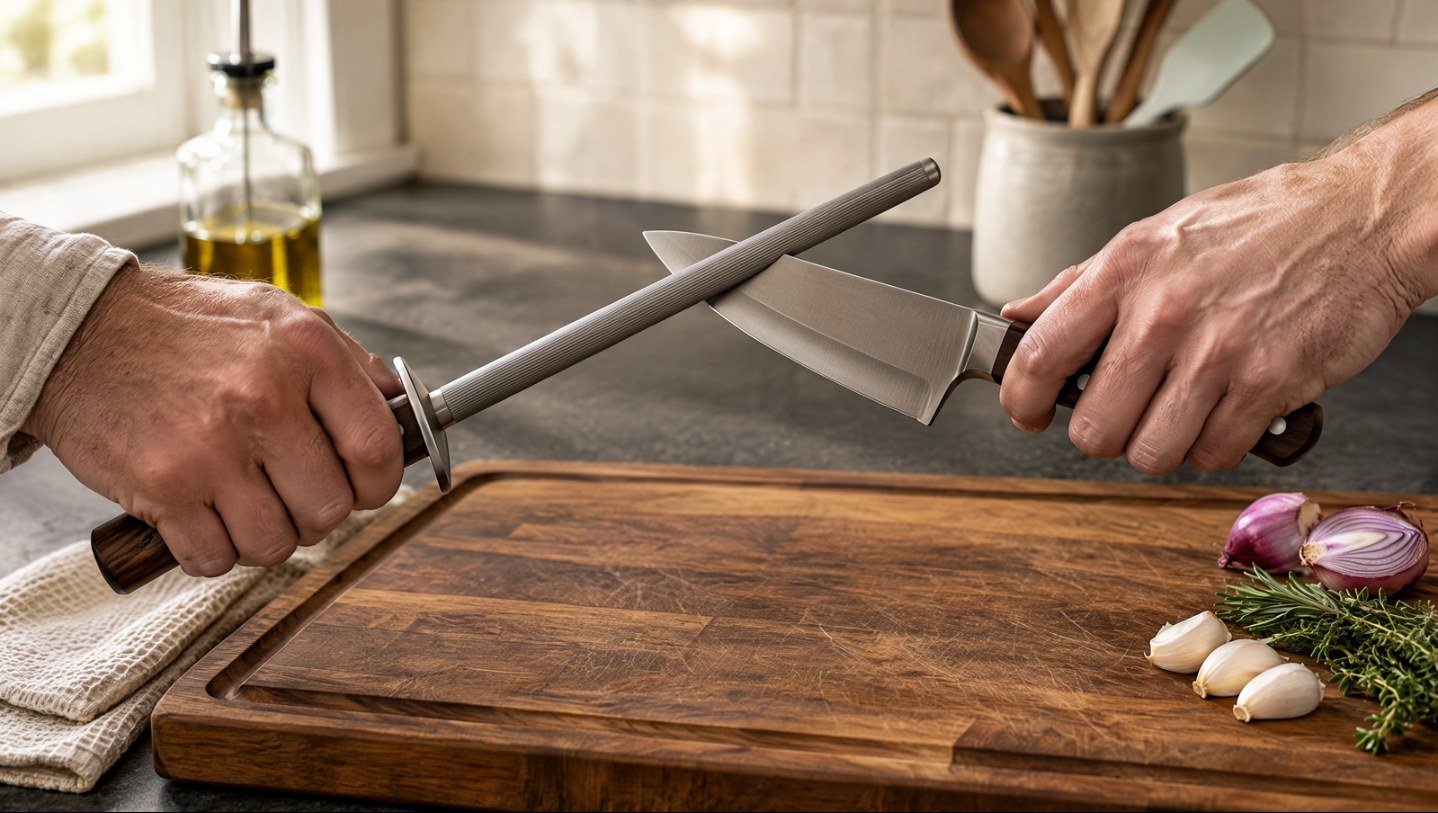
A sharp knife is a safe knife. Hone with a honing rod every few uses (it realigns the edge), and sharpen properly a few times a year — with a whetstone, a pull-through sharpener, or a professional service. Never put good knives in the dishwasher: hand wash and dry immediately.
Frequently Asked Questions
Is a knife set worth it for a beginner?
A small 3 to 5 piece set is good value if it includes a quality chef’s knife, paring knife and bread knife. Skip huge 15-piece blocks; most of those knives never get used.
What is the most important knife to buy first?
An 8-inch chef’s knife. It handles about 90% of everyday chopping, slicing and dicing, so put most of your budget there.
How often should I sharpen kitchen knives?
Hone with a steel every few uses to keep the edge aligned, and sharpen properly with a whetstone or pull-through sharpener every two to three months for home cooking.
The Bottom Line
Buy the best chef’s knife you can afford, add a paring knife and a bread knife, and learn to keep them sharp. Three good knives beat fifteen mediocre ones — every single time.
Found this guide useful? Save it to your kitchen board on Pinterest — and check our other kitchen guides for more honest, budget-friendly picks.
More from Deals Cluster:
- 12 Kitchen Gadgets Under $50 That Actually Save Time
- 10 Best Air Fryer Accessories Every Home Cook Needs


