Blender vs Food Processor: Which One Do You Actually Need?
Blenders and food processors look like they do the same job, and in some ways they do. Both chop, mix, and puree. But they are designed for different tasks, and choosing the wrong one leads to frustration. Here is a clear comparison to help you decide which machine you actually need.
What a Blender Does Best
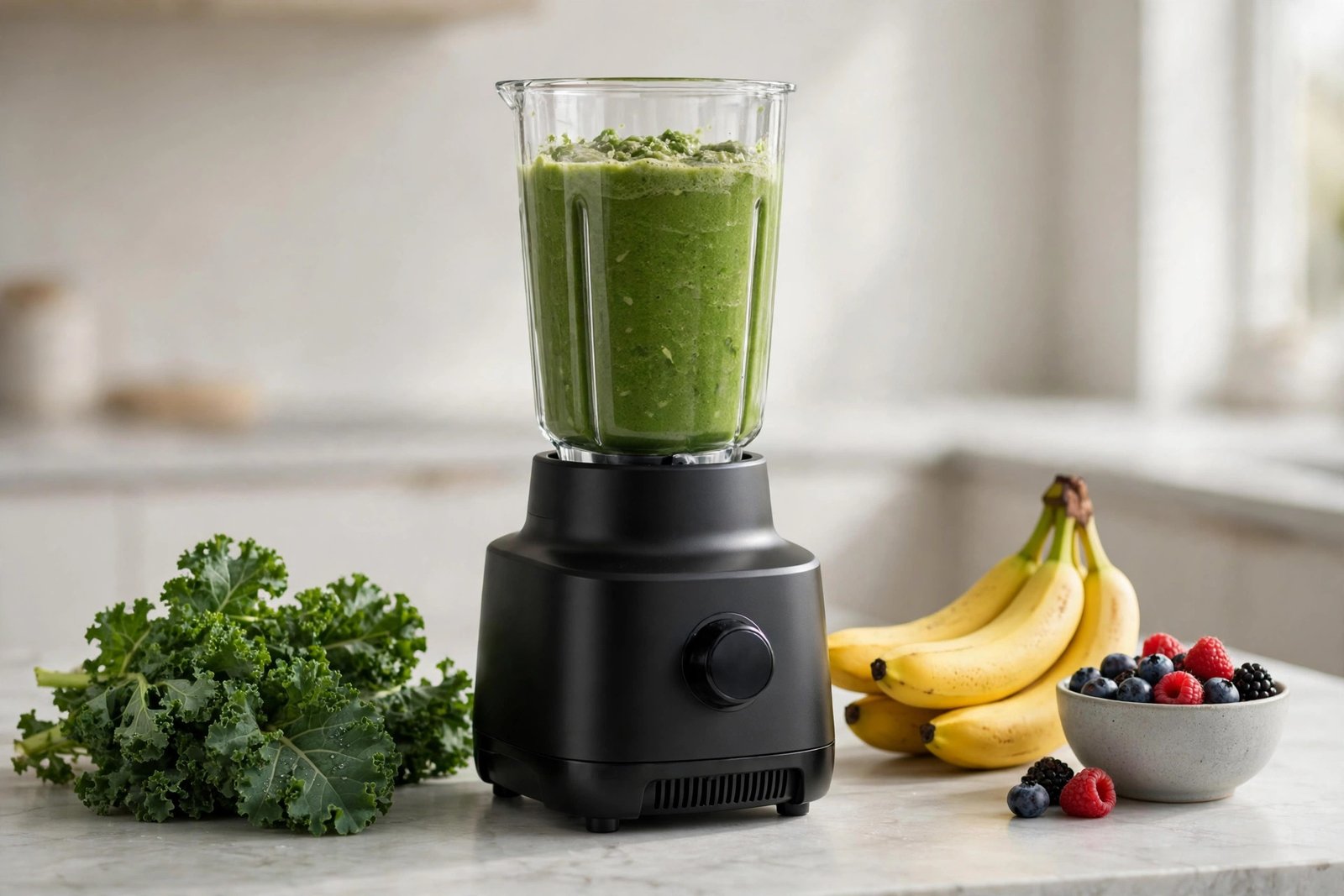
A blender is built for liquids and smooth textures. Its tall container and high-speed blades create a vortex that pulls ingredients down and blends them evenly. Blenders excel at smoothies, soups, sauces, nut butter, and frozen desserts. A high-performance blender like the Vitamix 5200 can also crush ice, pulverize seeds, and heat soup through friction. If your goal is a silky-smooth result, a blender is the right tool.
What a Food Processor Does Best
A food processor is built for solid foods and precise prep work. Its wide, flat bowl and interchangeable blades handle chopping, slicing, shredding, grating, and kneading dough. Food processors excel at salsa, pie dough, shredded cheese, sliced vegetables, and pastry. If your goal is to prep ingredients quickly and evenly, a food processor is the right tool.
Where They Overlap
There is some overlap between the two machines. Both can make hummus, pesto, and nut butter, though a blender gives a smoother result and a food processor gives more control over texture. Both can chop vegetables, though a food processor does it more evenly and a blender risks over-processing. Both can make dough, though a food processor handles it more easily. For most everyday tasks, either machine can get the job done, but one will usually do it better.
Key Differences at a Glance
- Best for liquids: Blender. Soups, smoothies, and sauces come out smoother.
- Best for solids: Food processor. Chopping, slicing, and shredding are faster and more even.
- Texture control: Food processor. Pulse control and blade options give precise results.
- Smoothness: Blender. Nothing beats a high-speed blender for silky purees.
- Capacity: Food processor for dry prep, blender for large liquid batches.
- Cleanup: Blender. A 30-second self-clean is hard to beat.
Who Needs a Blender?
A blender is the right choice if you make smoothies, soups, or sauces regularly, if you want silky textures, or if you like frozen desserts and nut butter. A high-performance blender can also replace several smaller gadgets, from a smoothie maker to a soup pot. If liquids are your priority, start with a blender.
Who Needs a Food Processor?
A food processor is the right choice if you do a lot of prep work: chopping onions, shredding cheese, slicing vegetables, or making dough. It saves the most time for people who cook from scratch several nights a week. If solid-food prep is your priority, start with a food processor.
Do You Need Both?
Can a Blender Replace a Food Processor?
Partly, but not completely. A high-performance blender can handle many food-processor jobs: chopping vegetables with the pulse switch, making hummus and pesto, and even mixing dough in small batches. What it cannot do as well is precise slicing and shredding, which need the flat discs of a food processor. It also struggles with dry ingredients in large amounts, since it relies on liquid to circulate. If you cook from scratch daily and prep large amounts of vegetables, a food processor still earns its place. For most other jobs, a good blender covers you.
Many serious home cooks eventually own both, since they cover different jobs. But if you can only choose one, think about what you make most often. Smoothies and soups point to a blender. Chopping and dough point to a food processor. A high-performance blender like the Vitamix 5200 covers more ground than a basic blender, handling many food-processor jobs in a pinch. You can check the Vitamix 5200 on Amazon to see the latest details, and for a full breakdown of its performance and versatility, read our Vitamix 5200 blender review.
As an Amazon Associate I earn from qualifying purchases.