Blender vs Food Processor: What’s the Difference?
Blender vs food processor is one of the most common kitchen questions, and the answer matters because the two machines do different jobs. Both chop and mix, but they are built for different textures and tasks. A blender is made for liquids and smooth results, while a food processor is made for solid ingredients and controlled chopping. Understanding the difference helps you pick the right tool for each job and get better results with less frustration.
As an Amazon Associate I earn from qualifying purchases.
What a Blender Does Best
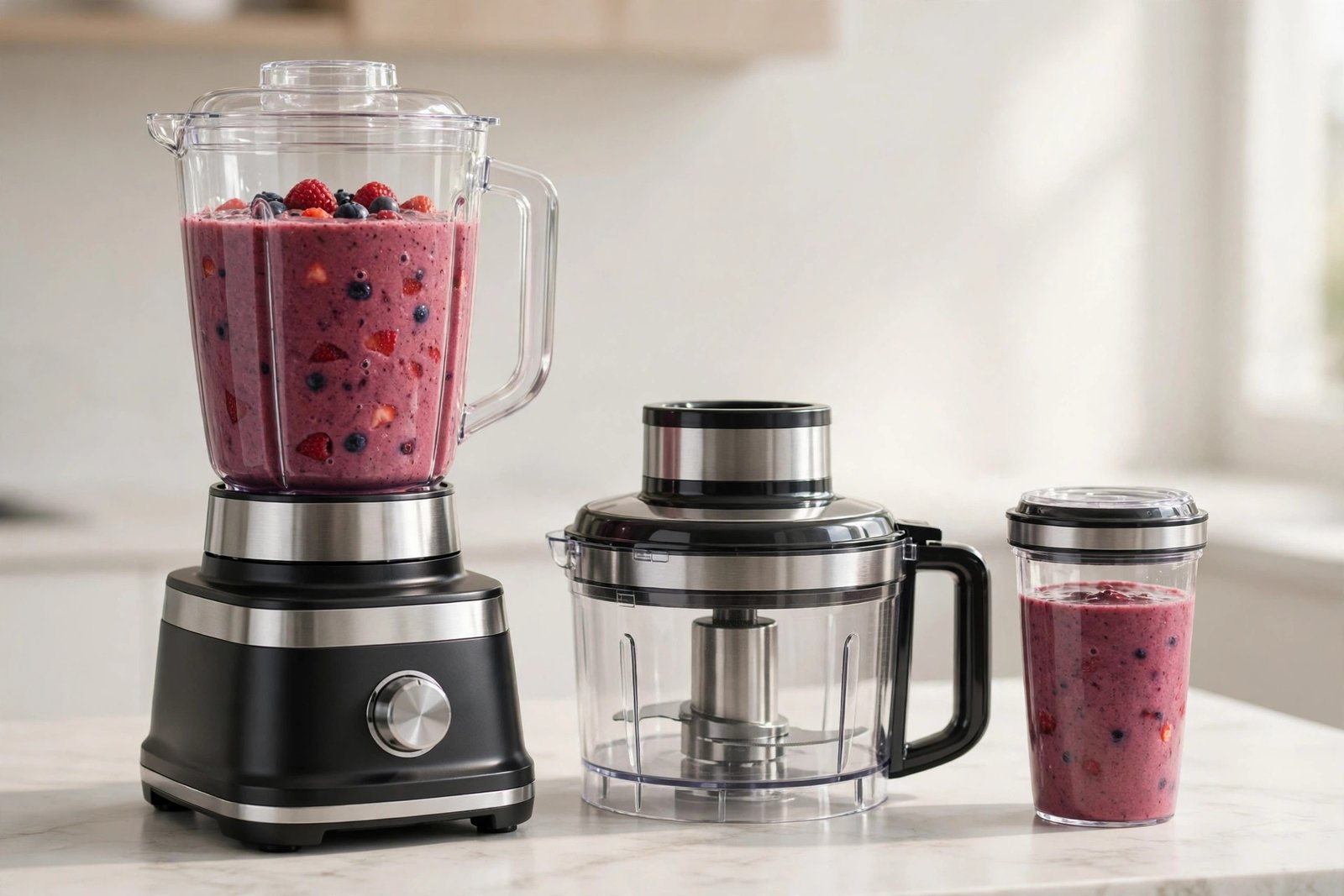
A blender has a tall, narrow pitcher with blades fixed at the bottom. When the motor runs, it pulls ingredients down toward the blades and creates a vortex that keeps the mixture moving. This design is ideal for smoothies, shakes, soups, sauces, and anything that should end up smooth and pourable. Blenders handle liquids and soft foods easily, and a strong motor can also crush ice and break down frozen fruit. The tall shape keeps liquids contained and makes pouring simple.
- Smoothies, shakes, and frozen drinks.
- Blended soups and smooth sauces.
- Nut butters and smooth spreads made in small batches.
- Crushing ice for drinks and chilled desserts.
What a Food Processor Does Best
A food processor has a wide, short bowl with interchangeable blades and discs. The wide shape gives solid ingredients room to spread out, and the blade sits low in the bowl so it can chop, slice, shred, and mix with control. This design is ideal for chopping vegetables, shredding cheese, slicing fruit, mixing dough, and making chunky salsas. Short pulses let you stop at exactly the texture you want, from coarse crumbs to a fine chop, without turning everything into a puree.
- Chopping onions, herbs, and vegetables quickly and evenly.
- Slicing and shredding with discs for salads and baking prep.
- Mixing dough and pastry with steady, even action.
- Making chunky dips, salsas, and salads with texture.
Key Differences at a Glance
The main difference is shape and purpose. A blender is tall and narrow for liquids, while a food processor is wide and low for solids. A blender usually has one fixed blade, while a food processor swaps between blades and discs for different jobs. A blender runs best in longer cycles that pull everything into a smooth mixture, while a food processor works best with short pulses that give you control over texture. A blender needs liquid to circulate well, while a food processor works happily with dry or firm ingredients.
Which Tool Should You Use?
Choose the blender when the result should be smooth and pourable, and choose the food processor when the result should keep some texture. If you are making a smoothie, a soup, or a sauce, the blender is the natural pick. If you are chopping vegetables for dinner, shredding cheese, or mixing dough, the food processor will do the job faster and with more control. Using the wrong tool is a common cause of disappointment, such as soupy salsa from a blender or a lumpy smoothie from a food processor.
Jobs That Suit Both Tools
Some tasks work in either machine, depending on the texture you want. Hummus can be silky from a blender or slightly rustic from a food processor. Pesto can be smooth or coarse. Baby food can be pureed in a blender or mashed to a chunkier texture in a processor. When a job fits both tools, think about the texture you want and the amount you are making, then pick the machine that matches.
When a Combination Kitchen System Makes Sense
If you cook often and your kitchen has limited space, a combination machine can be a practical answer. The Ninja Kitchen System TB401 combines a blender and a food processor in one base, so you get a tall pitcher for smooth blends and a processor bowl for chopping and prep, without needing two separate motors on the counter. The 1800-watt motor powers both sides of the system, and BlendSense technology helps the machine adapt to what is inside. For many home cooks, that combination covers nearly all everyday blending and processing jobs.
Getting the Best From Either Tool
Whichever tool you use, a few habits improve results. Cut ingredients into even pieces, do not overfill the container, and use pulses to control texture. Add liquid gradually when blending, and scrape down the sides when processing. Clean parts promptly so food never dries on blades or seals. If you want one machine that handles both smooth blends and everyday prep, you can see the Ninja TB401 Kitchen System on Amazon and decide if it fits your kitchen. For a closer look at its features, read our Ninja TB401 Kitchen System review.