How to Roast a Whole Chicken in the Breville BOV900
As an Amazon Associate I earn from qualifying purchases.
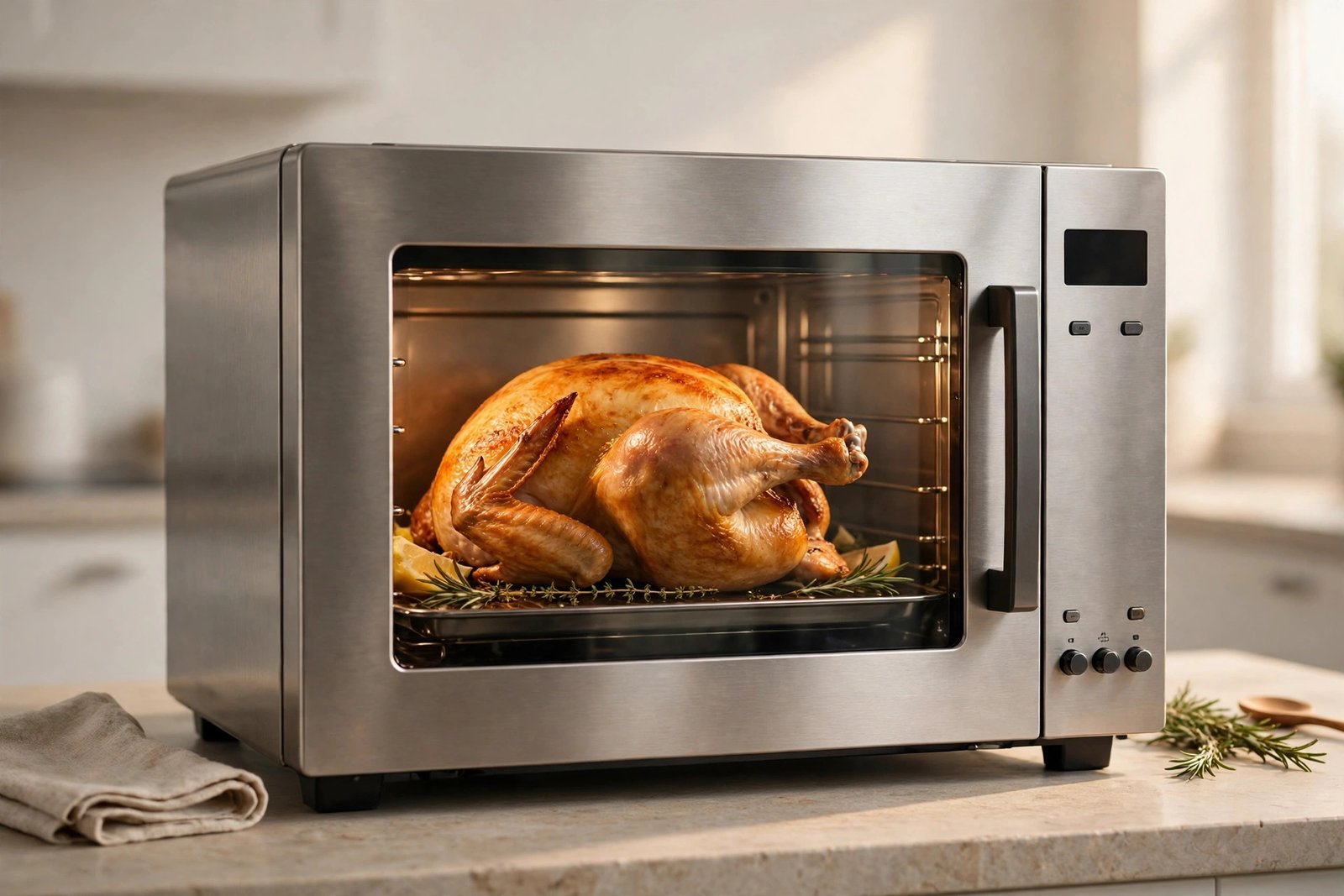
A whole roast chicken is one of the most satisfying meals you can make at home, and the Breville BOV900 handles it beautifully. Its countertop oven is large enough for a standard chicken, and the convection fan circulates hot air around the bird so the skin turns golden and crisp while the meat stays juicy. Because the oven preheats quickly and holds a steady temperature, you get reliable results without heating a full-size oven for a single chicken. This Breville BOV900 roast chicken guide covers the prep, seasoning, roasting steps, and resting time that make the difference between a good roast chicken and a great one.
Choosing and Preparing the Chicken
Look for a chicken between three and four pounds, which fits comfortably in the BOV900 roasting pan with room for air to circulate. A larger bird can work, but it may sit too close to the heating elements and brown unevenly. Take the chicken out of the fridge 30 minutes before cooking so it comes closer to room temperature, which helps it cook more evenly. Remove the giblets from the cavity and pat the skin completely dry with paper towels; dry skin is the single most important factor in getting crisp, golden results.
Ingredients and Equipment
- 1 whole chicken, 3 to 4 pounds
- 2 tablespoons of olive oil or softened butter
- 1 teaspoon of salt and half a teaspoon of black pepper
- 1 teaspoon of garlic powder and 1 teaspoon of paprika
- 1 lemon, halved
- 4 cloves of garlic, smashed
- A few sprigs of fresh thyme or rosemary
- 1 onion, quartered, optional
- A roasting pan or oven-safe dish that fits the BOV900
- Kitchen twine for trussing and a meat thermometer
Step-by-Step: Roasting in the Breville BOV900
- Preheat the oven. Set the BOV900 to roast or convection roast at 425 degrees Fahrenheit and let it preheat fully. A hot oven at the start helps the skin begin crisping immediately.
- Season the chicken generously. Rub the olive oil or butter all over the skin, then sprinkle the salt, pepper, garlic powder, and paprika evenly over the breast, legs, and back. Season inside the cavity as well, because it flavors the meat from the inside.
- Stuff the cavity. Place the lemon halves, smashed garlic, and herb sprigs inside the cavity. These release moisture and aroma as the chicken roasts, keeping the breast meat from drying out.
- Truss the legs. Tie the legs together with kitchen twine and tuck the wing tips under the body. Trussing helps the chicken hold a compact shape so it cooks evenly and looks neat when served.
- Place it in the pan. Set the chicken breast-side up in the roasting pan, and scatter the quartered onion around it if you are using it. Make sure the pan sits on the middle rack position with clear space above the bird.
- Roast at high heat, then reduce. Roast at 425 degrees for 20 minutes to crisp the skin, then reduce the temperature to 375 degrees and continue roasting for about 50 to 60 minutes. Baste once halfway through with the pan juices if you like, but avoid opening the door too often.
- Check the temperature. The chicken is done when a meat thermometer in the thickest part of the thigh reads 165 degrees Fahrenheit and the juices run clear. If the skin browns too quickly, tent the breast loosely with foil for the final stretch.
- Rest before carving. Move the chicken to a cutting board and let it rest for 15 minutes before carving. Resting lets the juices redistribute through the meat, so the slices stay moist instead of running dry on the board.
Using Convection for Better Results
The BOV900 convection fan is your best friend for roast chicken. It moves hot air around the bird, which browns the skin more evenly than still air and can shorten the cooking time slightly. If you are used to a conventional oven recipe, reduce the temperature by about 25 degrees when using convection, and start checking the internal temperature a few minutes earlier than the recipe suggests. Keep the chicken centered in the oven so the fan airflow reaches all sides.
Serving and Using the Leftovers
Carve the chicken at the table for a simple, generous presentation, or carve it in the kitchen and arrange the slices on a platter with the roasted onion and pan juices spooned over the top. Roast potatoes, a green salad, or steamed vegetables all pair well. Leftover meat keeps in the fridge for three to four days and works well in sandwiches, salads, and soups.
Common Mistakes to Avoid
Skipping the drying step is the most common error, because wet skin steams instead of crisping. Carving too soon is equally costly; a chicken cut straight from the oven loses far more juice than one that has rested.
To see the full capabilities of this oven, read our Breville Smart Oven Air Fryer Pro BOV900 review. You can also view the Breville BOV900 on Amazon for full specifications and the included accessories.