How to Roast Vegetables in the Breville BOV900: Crispy Every Time
As an Amazon Associate I earn from qualifying purchases.
Roast vegetables should come out of the oven crisp at the edges, tender in the middle, and full of flavour. Too often they turn out soft, pale, or steamed instead of roasted, and the usual reason is not the vegetables themselves but the heat, the spacing, and the pan. The Breville BOV900, with its even heat and precise temperature control, is well suited to roasting, once you know how to set it up properly.
This breville bov900 roast vegetables guide covers the best vegetables, temperatures and timings, rack position, seasoning, and batch tips.
Why the Breville BOV900 Roasts So Well
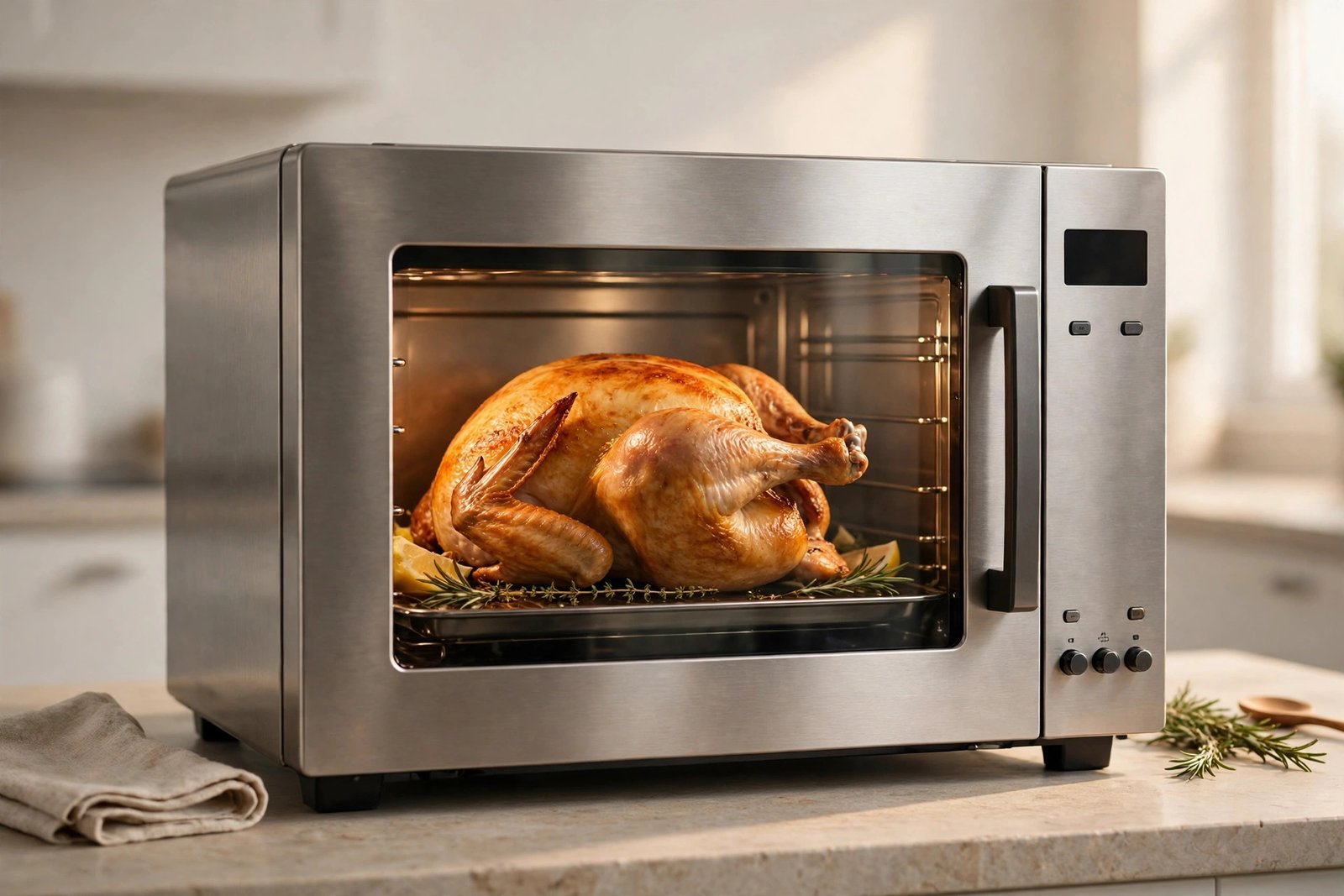
The BOV900 uses heating elements above and below, plus a convection fan, to spread heat evenly across the oven cavity. That even heat matters for roasting because vegetables need steady, direct heat to brown properly. The smaller cavity heats quickly and holds temperature well, which helps vegetables crisp rather than steam.
Use the convection setting, since moving air carries moisture away and lets the edges brown and crisp. Preheat the oven fully, and preheat the tray too if you have time, so the vegetables sizzle as soon as they land.
Best Vegetables for Roasting
Root vegetables and firm vegetables roast best. Potatoes, sweet potatoes, carrots, parsnips, and beets develop a sweet, caramelised flavour and a crisp outside when roasted at high heat. Brussels sprouts, cauliflower, broccoli, and courgettes also roast beautifully, though they cook faster and need a little more attention.
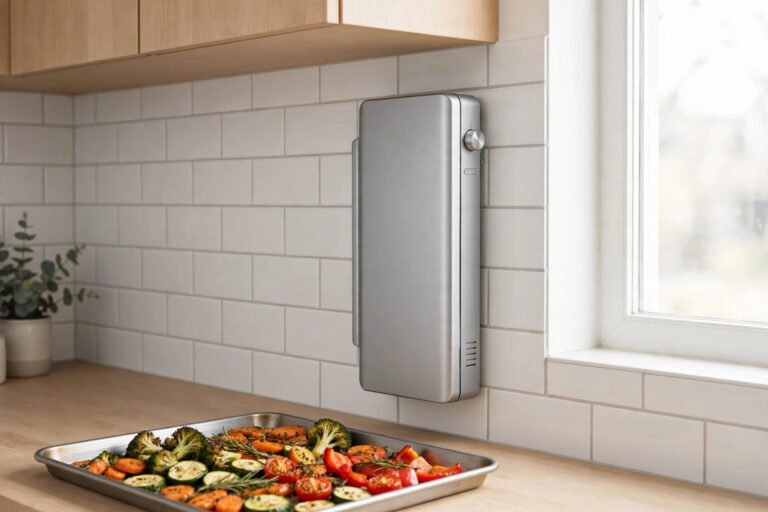
Softer vegetables such as tomatoes, peppers, and mushrooms roast well too, but they release more water, so give them extra space on the tray and a slightly shorter cooking time.
Cut vegetables into pieces of a similar size, about one to two inches across, so they finish cooking at the same time. Smaller pieces crisp faster and work well as a side dish, while larger chunks stay softer inside and suit a main course.
Temperature and Timing Guide
Most roast vegetables do best at 200 to 220 degrees Celsius, or 400 to 425 degrees Fahrenheit. That high heat drives off surface moisture and encourages browning, so keep the heat up unless a recipe says otherwise.
- Potatoes and sweet potatoes: 35 to 45 minutes, turning once halfway through
- Carrots and parsnips: 30 to 40 minutes, depending on thickness
- Brussels sprouts and cauliflower: 25 to 35 minutes, cut side down for browning
- Broccoli and courgettes: 20 to 25 minutes, check early so they stay bright
- Peppers and mushrooms: 20 to 30 minutes, with plenty of space on the tray
- Beets: 45 to 60 minutes, wrapped or cut small to speed up cooking
Start checking five minutes early, since smaller pieces can finish fast. Vegetables are done when the edges are golden and a fork slides in easily. If they are soft but pale, give them five more minutes.
Rack Position and Tray Setup
Place the rack in the middle position for most roasting, which gives even heat from above and below. If you want extra browning on the base, move the rack one position lower for the last five minutes. Avoid the very top position for roasting, since the upper element can scorch the tops before the centres are cooked through.
Use a rimmed tray lined with parchment and spread the vegetables in a single layer with space between pieces. Crowding traps steam and softens them, so use two trays or cook in batches, swapping trays halfway for even heat.
Seasoning for the Best Flavour
Toss the vegetables in oil before they go on the tray, using just enough to coat each piece lightly, about one to two tablespoons per tray. Too little oil leaves dry patches and too much makes them greasy. Olive oil suits most vegetables, while a neutral oil suits very high heat.
Season with salt and pepper before roasting, then add dried herbs such as rosemary, thyme, or paprika at the start so their flavour infuses as the vegetables cook. Save fresh herbs, garlic, lemon zest, and flaky salt for the end, since they burn easily at high heat.
Batch Tips and Serving Ideas
Roast vegetables in batches if you are cooking for a crowd, and keep finished batches warm in the BOV900 at a low temperature while the next tray cooks. Do not stack trays on top of each other to save space, since the steam will soften everything.
Leftovers work well the next day in salads, grain bowls, wraps, and frittatas. Reheat them in the BOV900 for a few minutes to restore crispness, rather than microwaving them.
For a full look at what this oven can do, from air frying to baking, read our full Breville BOV900 review before you choose. If roasting is high on your list, you can Check Price on Amazon and start with a tray of potatoes and carrots tonight to see the difference even heat makes.