How Does a Kitchen System Work?
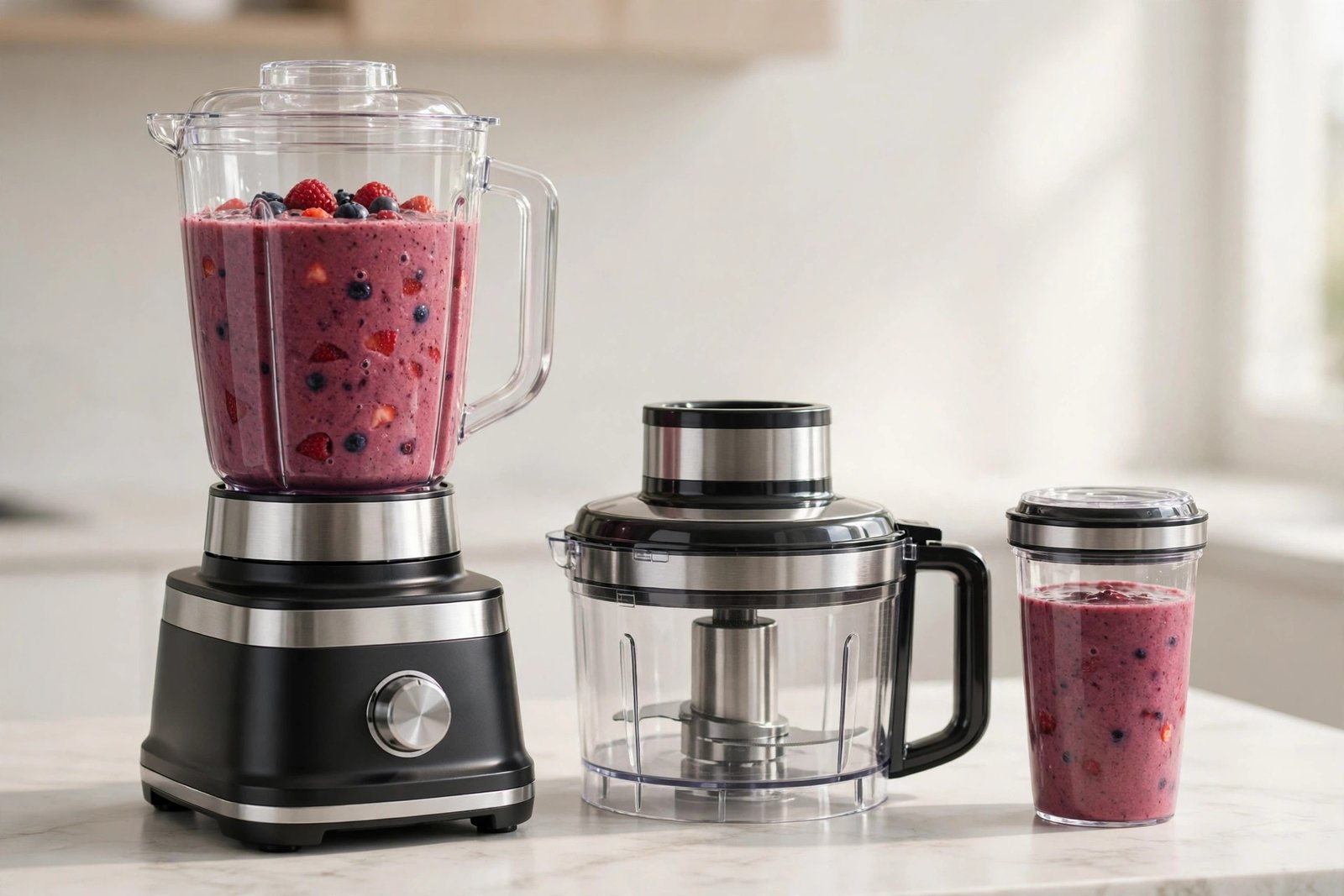
How does a kitchen system work? At its simplest, it is a single motorized base that powers two kinds of kitchen jobs: blending and food processing. Instead of buying and storing two separate machines, you get one base with interchangeable containers, blades, and discs. Swap the container, and the same motor drives a tall pitcher for smoothies or a wide bowl for chopping. This guide explains each part and how they work together.
As an Amazon Associate I earn from qualifying purchases.
The Base: One Motor, Many Jobs
The base is the heart of the system. It holds the motor, the controls, and the coupling that connects to the containers. When you lock a container onto the base and press a control, the motor spins a drive shaft that turns the blade inside the container. The Ninja Kitchen System TB401 uses an 1800-watt motor, which gives it the strength to handle both smooth blending and heavier processing jobs from the same base. Controls let you choose short pulses for chopping or longer runs for smooth blends.
- Motor: provides the power for blending and processing.
- Controls: set pulses, timed runs, and speed patterns.
- Coupling: connects the motor to the blade in each container.
- Safety locks: stop the motor unless parts are seated correctly.
The Pitcher: How Blending Works
The tall pitcher is designed for liquids and smooth results. Blades sit at the bottom, and when they spin they pull ingredients down and create a vortex that keeps the mixture circulating. Liquid ingredients flow freely through this vortex, which is why adding liquid first helps everything blend evenly. Firm pieces are gradually pulled down toward the blades and broken into smaller and smaller bits until the mixture turns smooth. The 72oz pitcher gives you room for family-size batches while leaving space for the contents to move.
Why Liquid and Order Matter
Blending works best when ingredients can move. Without enough liquid, thick mixtures can form an air pocket around the blades and stop circulating. Adding liquid first, then soft ingredients, then firm or frozen pieces on top, keeps the vortex going. If a thick blend stalls, stop the machine, stir the contents toward the blades with a spatula, and blend again in short runs until it flows smoothly.
The Processor Bowl: How Processing Works
The wide processor bowl works differently from the pitcher. Its broad, low shape spreads solid ingredients out so the blade can reach them evenly. Interchangeable blades chop and mix, while discs slice and shred. Short pulses give you control over texture, because each burst cuts the food a little more and then stops, letting you check the result. This pulse-and-check rhythm is what makes a food processor so good at chopping vegetables evenly without turning them into a puree.
How the Machine Adapts to the Load
Modern kitchen systems can adjust how they run based on what is inside the container. BlendSense technology in the TB401 helps the machine sense the load and adapt its blending pattern, so thick mixtures and lighter ones are handled differently. This kind of sensing takes some of the guesswork out of blending, especially for beginners. Even so, good prep still matters: even pieces, sensible batch sizes, and the right container for the job will always improve results.
Why One Base Beats Two Machines
A kitchen system saves counter space, storage space, and money compared with owning a separate blender and food processor. You learn one set of controls, clean one base, and store one motor instead of two. For everyday cooking, that convenience adds up quickly. You can blend a morning smoothie, then swap to the processor bowl to chop vegetables for dinner, all with the same machine. If you want to see how this combination works in practice, you can see the Ninja TB401 Kitchen System on Amazon and check the details. For a closer look at everyday performance, read our Ninja TB401 Kitchen System review.