How Long Do Stand Mixers Last? Care Tips for a Lifetime of Baking
A stand mixer is a purchase you hope to make once. So how long do stand mixers last — and what can you do to make sure yours is still going strong a decade from now? The honest answer is that lifespan depends less on the calendar and more on how the mixer is used and cared for.
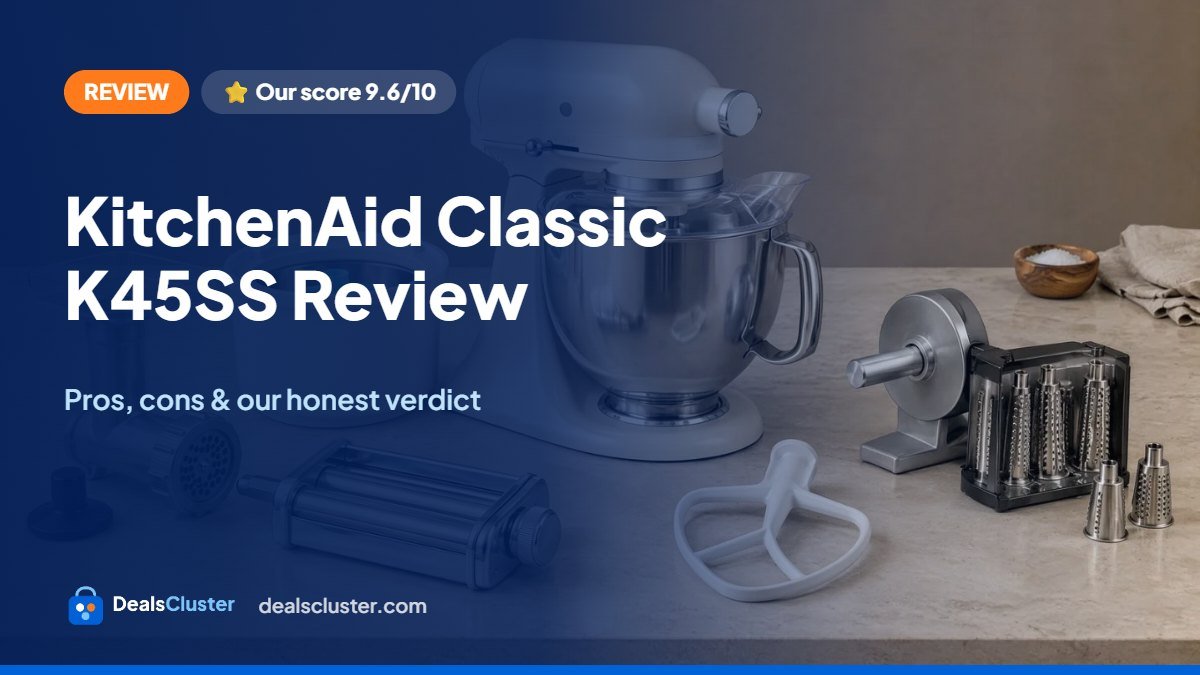
A well-made mixer such as the KitchenAid Classic Series 4.5 Quart Tilt-Head Stand Mixer K45SS is built for years of regular use. With sensible habits, many owners bake with the same mixer for a very long time. Here is what affects lifespan, and the care that makes the biggest difference.
What Affects How Long a Mixer Lasts
How hard you work it
The motor is the heart of the mixer, and how hard it works is the biggest factor in its life. Everyday jobs — cake batter, cookie dough, whipped cream — are easy work. Frequent heavy kneading of large, stiff doughs is much harder on the motor, especially at high speeds. Matching the job to the right speed and batch size is the single best thing you can do for longevity.
How often you use it
A mixer used a few times a week for normal baking will generally last many years. Heavy daily use, such as running a small baking business from home, wears parts faster — but even then, good care and rest between batches make a real difference.
How you clean and store it
Moisture, dust, and knocks all take a toll over time. A mixer that is wiped down after use, stored dry, and protected from dust will age far better than one left splattered and damp. Attachments that are stored carefully last longer too.
Care Habits That Add Years
- Use the right speed: knead dough on low, cream on medium, and whip on high. High speeds with heavy loads are the fastest way to strain a motor.
- Do not overload the bowl: fill the 4.5-quart bowl no more than about two-thirds full, and split big batches in two. Smaller loads mix more evenly and stress the motor less.
- Rest between heavy jobs: after a long knead, let the motor cool for a few minutes before starting another heavy batch.
- Use the right attachment: the dough hook is made for kneading; the flat beater is not. The right tool does the job with far less effort.
- Clean it after every use: wash the bowl and attachments, wipe the body with a damp cloth, and dry everything before storing.
- Keep it dry: never immerse the mixer body in water, and never put parts away wet.
- Store it safely: a stable countertop spot or a cabinet shelf where it will not be knocked or dropped protects the housing and the hinge.
Signs Your Mixer Needs Attention
Most mixers give fair warning before a small problem becomes a big one. Pay attention to:
- A new grinding, clicking, or rattling noise that does not go away.
- A burning smell or the motor stopping mid-job.
- The speed control no longer changing the speed.
- A head that feels very loose or wobbles badly.
- Attachments that no longer fit snugly on the beater shaft.
For minor issues, the fix may be as simple as refitting an attachment or reducing the load. For anything involving smell, smoke, or internal noise, stop using the mixer and seek professional repair. Continuing to run a struggling mixer can turn a small repair into a dead motor.
Parts That Wear Out First
Attachments usually wear before the mixer itself. Wire whips can bend, coatings can chip, and bowls can pick up dents and scratches. Replacing a worn attachment is inexpensive and keeps the mixer working as it should — a damaged attachment can scratch the bowl or shed flakes into food.
The bowl and attachments are also the parts you handle most, so treat them gently: hand wash, dry thoroughly, and store them where they will not knock together.
Is It Worth Repairing an Old Mixer?
Often, yes. A well-built mixer with a single faulty part is usually worth repairing rather than replacing, especially if the motor itself is sound. A qualified repair service can advise whether a fix is sensible for your mixer’s age and condition. Keeping a good mixer going is usually cheaper — and less wasteful — than buying new.
A Mixer That Lasts Is a Mixer That Is Cared For
There is no fixed expiry date on a stand mixer. Use it sensibly, keep it clean and dry, and pay attention to early warning signs, and it will reward you with years of reliable baking. For more on this model, see our full KitchenAid K45SS review.
If you are choosing a mixer to keep for the long term, you can check out the KitchenAid K45SS on Amazon. Look after it well, and it will be part of your kitchen for a very long time.
As an Amazon Associate I earn from qualifying purchases.