How to Use a Ninja Kitchen System: A Beginner’s Guide
Learning how to use Ninja Kitchen System machines is easier than it looks. At first glance there are several parts to get to know, but once you learn the basic setup, everyday jobs become quick and simple. This beginner guide walks you through the parts, the controls, and the techniques that matter most, so you can start blending smoothies, chopping vegetables, and prepping meals with confidence from day one.
As an Amazon Associate I earn from qualifying purchases.
Know Your Parts Before You Start
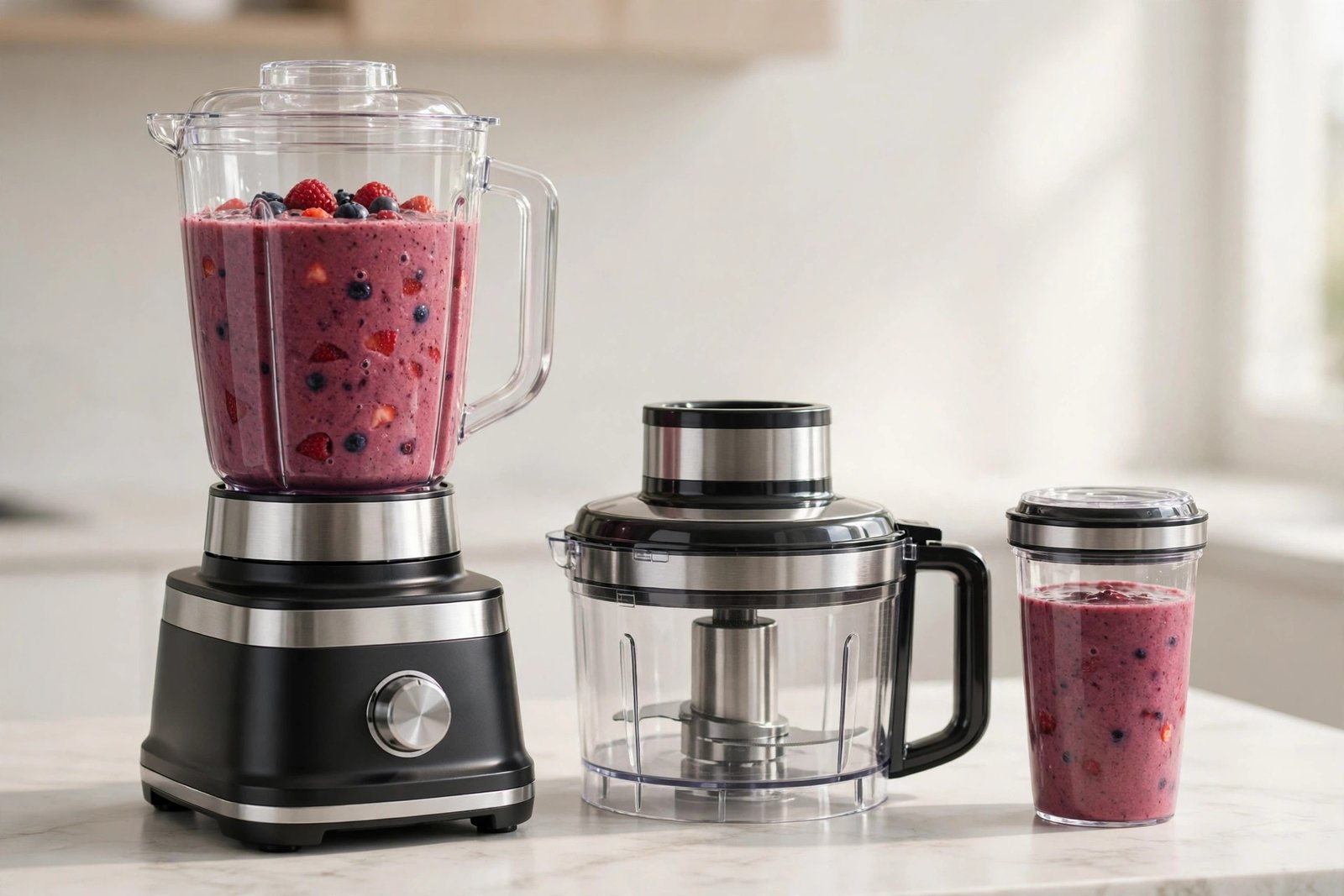
A kitchen system combines a blender and a food processor in one base, so it comes with more parts than a single-purpose machine. The base holds the motor and controls, and the containers lock onto it one at a time. The tall pitcher is for blending drinks, soups, and sauces, while the wide processor bowl is for chopping, slicing, shredding, and mixing. Blades and discs swap in and out depending on the job, and each lid is shaped to fit its own container. Take a few minutes to lay everything out and match each part to its container before your first use.
- Base: holds the motor and controls, and stays on the counter.
- Pitcher: tall container for smoothies, soups, and sauces.
- Processor bowl: wide container for chopping, slicing, and mixing.
- Blades and discs: swap to match the task at hand.
- Lids: each one fits its own container and must lock fully.
Setting Up for Your First Use
Before you blend or process anything, wash the pitcher, bowl, lids, and blades with warm soapy water and dry them well. Place the base on a flat, stable counter with room around it, and keep the cord away from water and hot surfaces. Fit the container you need onto the base and lock it into place, then fit the blade or disc and close the lid. Most systems will not run unless every part is seated correctly, so take your time and check the fit before switching on.
Blending: The Basics
For smoothies and drinks, add liquid first, then soft ingredients, then firm or frozen pieces on top. This order helps the blades catch and circulate the contents. Keep the 72oz pitcher below its marked fill line so the mixture has room to move. Start with a few short pulses to break down large pieces, then run a longer blend until the texture looks smooth. Stop and check halfway through, and use a spatula to move thick mixtures toward the blades if needed, with the machine switched off first.
Tips for Smoother Blends
Cut firm fruit and vegetables into smaller, even pieces so they blend evenly. Add liquid a little at a time rather than all at once, since you can always thin a mixture but thickening it is harder. For thick blends, pause the machine, stir the contents, and blend again in short runs. BlendSense technology helps the machine adapt to the load, but good prep still makes the biggest difference to the final texture.
Food Processing: The Basics
For chopping and prep, fit the processor bowl and the right blade or disc, add prepared ingredients, and close the lid. Cut large items into pieces that fit easily in the bowl or feed tube, and work in batches rather than overfilling. Use short pulses for chopping, checking the texture after each few pulses, and use steady pressure on the pusher when slicing or shredding. Stop the machine before opening the lid, and always remove food with a spatula rather than your fingers.
Common Beginner Mistakes to Avoid
New users often make the same few mistakes, and all of them are easy to fix. Overfilling is the most common one, since a crowded container processes unevenly and strains the motor. Skipping the pulse step is another, because a long continuous run can turn chopped vegetables into a puree before you notice. Forgetting to lock the lid fully is also common, and it will stop the machine from starting. Slow down, check each step, and your results will improve quickly.
Cleaning Up and Building Confidence
Clean parts promptly after each use so food never dries on blades or seals, and dry everything well before storing. Start with simple jobs, such as a morning smoothie or chopped vegetables for dinner, and try one new task at a time. With a little practice, you will learn how many pulses give you the texture you want and which container suits each job. If you are still choosing your first system, you can see the Ninja TB401 Kitchen System on Amazon and check the details. For a closer look at everyday performance, read our Ninja TB401 Kitchen System review.